
Quick Reference
| Scientific Name | Rattus norvegicus |
| Classification | Mammalia / Rodentia / Muridae |
| Size | Body 7–9.5 inches; tail 6–8 inches (shorter than body); total up to 18 inches |
| Weight | 7–18 oz (roughly the weight of a can of soup) |
| Color | Coarse brown or gray-brown on back; lighter gray or white belly |
| Lifespan | 12 months in the wild; up to 3 years in protected conditions |
| Diet | Omnivore; prefers protein and grain; will eat garbage, pet food, carrion |
| Reproduction | 4–6 litters per year, 6–12 pups per litter; sexually mature at 3 months |
| Active Season in Oklahoma | Year-round; highest structural pressure September through November |
| Threat Level | High — serious disease transmission risk, structural damage, burrowing damage to foundations |
| Common in Oklahoma City Metro | Yes — most commonly encountered large rodent in Oklahoma City’s older urban and commercial areas |
If you have found a large, heavy-bodied rodent in your home, garage, crawlspace, or along your foundation — or if you are seeing droppings the size of a Tic Tac near your trash cans, in your garage, or along a wall — there is a strong chance you are dealing with a Norway rat. Norway rats are the dominant large rodent species in Oklahoma City’s older neighborhoods, commercial districts, and sewer systems. They are not a rural pest or a restaurant-only problem. They burrow under foundations, contaminate food supplies, and gnaw through wiring with the same relentless efficiency that makes them one of the most successful mammals on earth. No property is exempt. A Norway rat needs only a hole the size of a quarter — about 3/4 inch — to enter a structure. In Oklahoma City’s older housing stock, those gaps are everywhere. Alpha Pest Solutions serves Oklahoma City, Edmond, Norman, Moore, Midwest City, Del City, Yukon, Mustang, and surrounding communities.
Identifying Norway Rats in Oklahoma
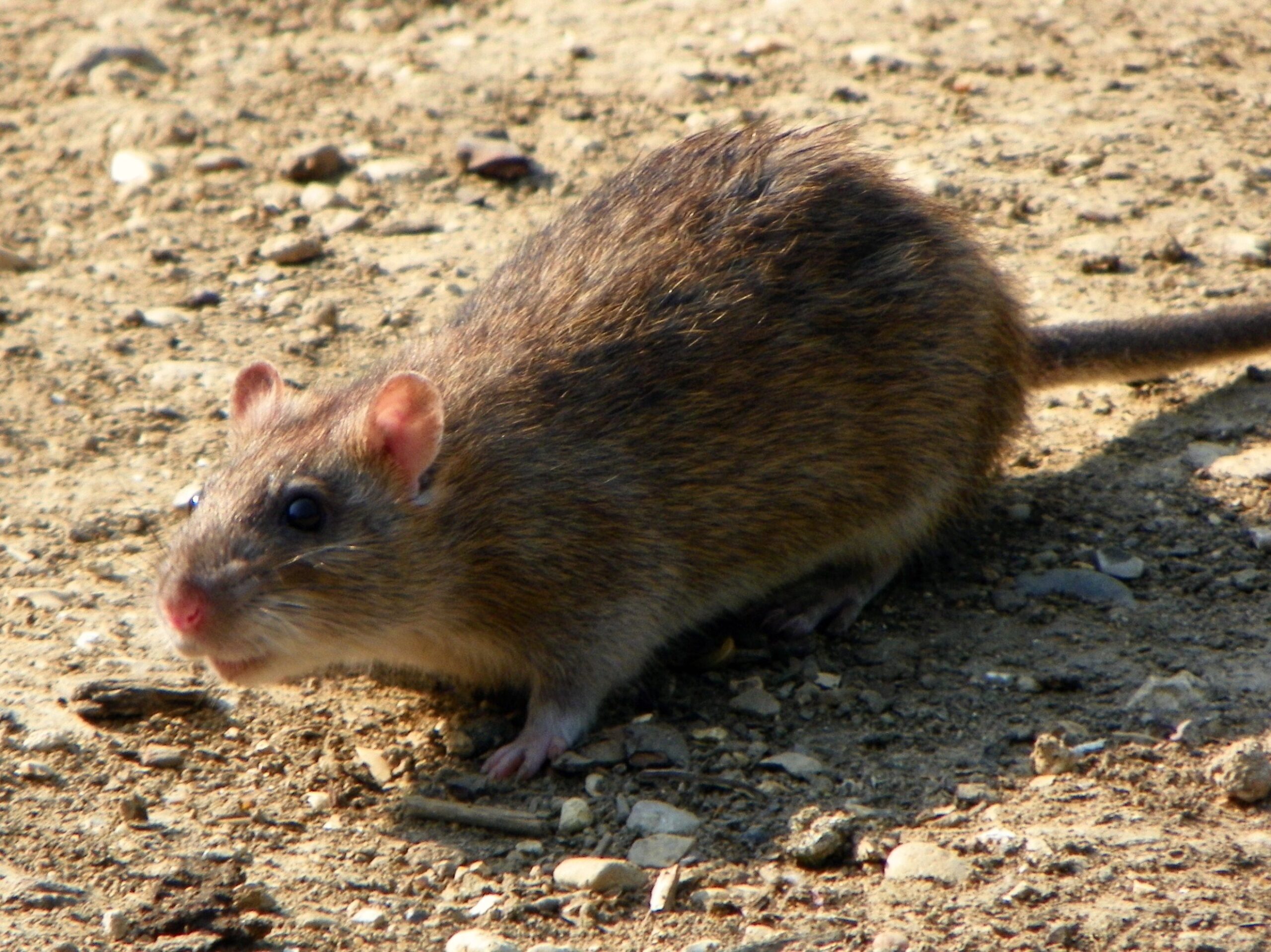
The Norway rat is large, heavy, and built low to the ground. Adults measure 7 to 9.5 inches in body length with a thick, blunt body and a tail that is shorter than the body — a key distinction from the roof rat. Weight ranges from 7 to 18 ounces, making a large Norway rat roughly the weight of a can of soup. The coat is coarse, brown to gray-brown on the back with a paler gray or white belly.
Key physical features:
- Head: Broad and blunt with a short, rounded nose
- Ears: Small and close-set relative to head size; do not reach the eyes when pressed forward
- Eyes: Small and dark
- Tail: Thick, scaly, nearly hairless, and distinctly shorter than the body length
- Body: Heavy and stocky, low-slung posture; moves with a deliberate, ground-hugging gait
- Feet: Large hind feet, built for digging
Norway rats are powerful burrowers and primarily ground-level animals. They do not prefer to climb, though they are capable of it. Their burrow systems — with multiple entry points, food caches, and nesting chambers — are one of their most diagnostic signs.
Norway Rat vs. Roof Rat vs. House Mouse
Correct identification determines the treatment approach. Norway rats, roof rats, and house mice have meaningfully different habits, harborage preferences, and entry points.
Norway Rat vs. Roof Rat: The roof rat (Rattus rattus) is sleek and lightly built with a tail longer than its body, large ears, and a pointed nose. Roof rats are agile climbers and prefer upper areas of structures — attics, high wall voids, and ceiling spaces. Norway rats are heavier, blunter, and ground-oriented. Roof rats are rare in Oklahoma City. If you have a rat in your attic, it is almost certainly a Norway rat — they access attics through AC line penetrations, loose soffits, and gaps at the roofline and are found in Oklahoma attics regularly. A rat in the attic or upper walls in Oklahoma City is almost always a Norway rat, not a roof rat.
Norway Rat vs. House Mouse: Size alone settles this comparison. Even a juvenile Norway rat is noticeably heavier and longer-bodied than an adult house mouse. The Norway rat has a broader, blunter head and much smaller ears relative to body size. House mouse droppings are grain-of-rice sized; Norway rat droppings are Tic Tac sized. Finding a large animal in a garage or basement that looks like a very big mouse is a Norway rat.
Types Found in Oklahoma
[Diagram placeholder: Rodent identification comparison chart — Norway Rat vs. Roof Rat vs. House Mouse. Should show size, tail length, ear size, body shape, and dropping size at the same scale. Clean infographic on white background with labeled arrows. Pending artwork — replace at photo pass.]
The Norway rat (Rattus norvegicus), also called the brown rat, sewer rat, or wharf rat, is the only species in its genus commonly encountered in Oklahoma structures. It is not native to North America — it arrived from Europe with early settlers and has since spread to every inhabited continent. The “roof rat” sometimes encountered in Oklahoma City is a separate species (Rattus rattus) and is treated on its own page.
Diet, Behavior, and Habitat
Norway rats are omnivores with a strong preference for protein-rich and high-calorie foods. Meat scraps, pet food, birdseed, grain, eggs, and fruit are preferred, but they will eat virtually anything available including garbage, carrion, insects, and each other. They need water regularly — unlike house mice, Norway rats must drink roughly 1 ounce of water per day, making proximity to water sources (leaky pipes, standing water, pet water bowls) a consistent attractant.
Norway rats are neophobic — they are initially suspicious of new objects in their environment. This matters for trapping and baiting: freshly placed traps are often avoided for the first 24 to 72 hours until the rat acclimates. Bait stations placed along established runways eventually become accepted and are the most reliable long-term control tool.
Rats are highly social and live in organized colonies with dominant and subordinate individuals. A single pair can quickly become a colony. They establish defined runways — usually along walls, fence lines, and foundation edges — and follow these routes consistently. Runway smears and grease marks along walls are a reliable sign of a well-established population.
Burrow systems are the defining habitat of the Norway rat. Burrows have one or more main entrances (typically 2 to 3 inches in diameter), concealed emergency exits, a nesting chamber lined with soft debris, and often a food cache. Burrows are found along foundation walls, under concrete slabs, beneath woodpiles and debris, along fence lines, and under outdoor structures. In Oklahoma’s older urban areas, Norway rats also colonize the municipal sewer system and use it as a protected travel corridor between properties.
Life Cycle and Reproduction
Norway rats reproduce at a rate that makes early intervention essential.
Key reproductive numbers:
- Sexual maturity: approximately 3 months
- Gestation: 21–23 days
- Litter size: 6–12 pups (average 8–9)
- Litters per year: 4–6 under optimal conditions
- Pup development: born blind and hairless; eyes open at 14 days; weaned at 21 days
- Population from a single pair in 12 months: potentially 40–60 individuals under controlled conditions; more in ideal field conditions
Life stages:
- Newborn: Hairless, pink, eyes and ears sealed; entirely dependent on nest
- Juvenile (days 14–28): Eyes open, fur developing, beginning to leave nest
- Subadult (weeks 4–12): Foraging independently, not yet sexually mature
- Adult (3 months and beyond): Full size, sexually active, capable of breeding
Treatment window implication: A small Norway rat problem becomes a large one within a single season. A pair discovered in the spring can be a colony of 50 or more by fall. When Norway rats are identified, treatment should begin immediately.
What Attracts Norway Rats to Oklahoma Homes
No property is immune. Oklahoma’s mix of older urban housing, commercial food service, an aging sewer infrastructure, and abundant agricultural areas in and around the metro creates conditions favorable to Norway rats across the entire region.
Sewer system access: Oklahoma City has an extensive older sewer system that Norway rats use as a protected travel network. Rats enter sewers through broken lines, unsealed cleanouts, and gaps where sewer lines meet older foundations. A property with sewer access nearby has a persistent Norway rat pressure that cannot be fully eliminated without addressing the sewer connection.
Outdoor food sources: Unsecured trash cans, compost piles, outdoor pet food, birdseed on the ground, fallen fruit, and livestock feed are the most common outdoor attractants. Norway rats will establish a burrow system within 100 to 150 feet of a reliable food source and maintain it indefinitely.
Water access: Leaky outdoor faucets, standing water in low areas, pet water bowls left outdoors, and plumbing leaks beneath slabs or in crawlspaces all provide the regular water supply Norway rats require. Eliminating water sources is one of the most effective deterrents.
Aging housing stock and foundation gaps: Homes built before 1980 in central Oklahoma City, Midwest City, Del City, and similar communities frequently have settlement cracks in foundations, gaps at pipe penetrations, and deteriorated threshold gaps that provide easy access. A quarter-inch gap — or larger — is all a rat needs.
Commercial food operations nearby: Properties adjacent to restaurants, grocery stores, food processing facilities, or waste transfer areas have higher Norway rat pressure due to the volume of food waste available in those environments. Oklahoma City’s dense commercial corridors along NW Expressway, SW 44th, and 23rd Street are historically high-pressure corridors.
Construction and urban development: Active construction sites disturb established burrow systems and push rat populations toward adjacent residential properties. Oklahoma City’s ongoing redevelopment in Capitol Hill, Midtown, and other urban corridors regularly displaces established rat colonies. Homes in active construction areas are often left open and accessible during construction phases, frequently vacant for a period, and located in areas where surrounding habitat is being cleared — all of which make them highly attractive to Norway rats during and after the build.
Where Found in Oklahoma City Metro
Central and south Oklahoma City: Capitol Hill, Putnam City, and the older residential corridors along South Western, South Pennsylvania, and adjacent streets have the highest Norway rat structural pressure in the metro. Aging housing stock, proximity to commercial food waste, and older sewer infrastructure combine to create persistent populations.
Midwest City and Del City: Post-WWII dense housing adjacent to commercial corridors. Norway rats are frequently found in these communities alongside house mice, and identification matters for treatment.
Commercial areas throughout Oklahoma City: Any block with restaurant density or food retail generates Norway rat pressure for adjacent residential properties. The Paseo District, Film Row, and downtown Oklahoma City urban residential development have all seen increased Norway rat pressure as density increases.
Norman: Proximity to the University of Oklahoma and its food service operations, along with an older urban core, makes Norman one of the higher-pressure communities in the metro for Norway rats in commercial and near-commercial residential areas.
Nichols Hills and Midtown Oklahoma City: Older homes, crawlspaces, and detached outbuildings in Nichols Hills and Midtown make these areas particularly attractive to Norway rats. Aging foundation gaps, established tree cover, and proximity to commercial corridors create ideal conditions for entrenched colony development.
Where Found Inside Homes and on Properties
Burrow systems adjacent to foundation: The most common location. Norway rats burrow along foundation walls, under slabs, under porches, under outdoor AC units, and along fence lines. Look for 2 to 3 inch diameter holes with smooth entry edges and freshly disturbed soil nearby.
Crawlspace: Norway rats establish in crawlspaces and use the subfloor cavity to move throughout the structure. They contaminate crawlspace insulation, gnaw on ductwork, and access interior spaces through plumbing chases and utility penetrations.
Basement: Any accessible basement with food, moisture, or warmth attracts Norway rats. Utility areas, water heater spaces, and storage areas with cardboard or organic material are primary targets.
Attached garage: Along the base walls, under stored equipment, inside bags of seed or pet food, and within the wall cavity between the garage and living space.
Kitchen and pantry: Norway rats entering through crawlspace or utility penetrations access kitchen areas through cabinet toe-kicks, under-sink cabinets, and wall voids adjacent to appliances. Droppings found in kitchen spaces from a rat (Tic Tac size vs. grain of rice for mouse) confirm a serious infestation requiring immediate attention.
Attic: Norway rats are still commonly found in attics in Oklahoma. Roof rats are rare in Oklahoma City — if you have a rat in your attic, it is far more likely to be a Norway rat than a roof rat. Entry into attic spaces most commonly occurs through AC line penetrations (where refrigerant lines pass through the soffit or wall), loose or damaged soffits, and gaps where siding meets the roofline. Once inside, rats move freely between attic and wall void.
Sewer-adjacent spaces: Utility rooms with floor drains, basement sump areas, and areas adjacent to toilet flanges are potential rat entry points when sewer lines are compromised.
Signs of a Norway Rat Infestation
Droppings: The most reliable sign. Norway rat droppings are approximately 3/4 inch long — roughly the size of a Tic Tac — capsule-shaped with blunt ends, dark brown to black when fresh and gray-brown when older. They are larger and blunter than house mouse droppings (grain of rice) and larger than roof rat droppings (1/2 inch, more spindle-shaped). Finding large droppings along walls, behind appliances, in cabinets, or near trash cans is a strong indicator of Norway rats.
Burrow holes: Two to three inch diameter holes with smooth, compacted earth inside the entry, found along foundations, fence lines, and under structures. Active burrows have clean, open entries with fresh soil disturbance; inactive burrows accumulate debris and spiderwebs across the opening.
Runway smears: Dark, greasy smear marks (rub marks) along the base of walls, around pipes, and at entry points, caused by the oil and dirt in the rat’s fur. Norway rat rub marks are heavier and wider than mouse runway smears.
Gnaw marks: Large, rough gnaw marks on wood, plastic piping, and electrical conduit. Norway rat gnaw marks are typically 1/8 inch or larger with rough, splintered edges. Active gnaw marks are lighter in color; older marks are darkened by age and grime.
Tracks: In dusty or muddy areas, Norway rat hind footprints are 3/4 to 1 inch long with five visible toes. The tail drag mark, when present, is broader than a mouse’s. Tracking powder placed along suspected runways can confirm the species and runway location.
->Odor: Norway rats produce a sharp, musky ammonia odor from urine accumulation. A heavy infestation in a crawlspace, garage, or wall void produces a distinctive and persistent smell that intensifies in warm, enclosed spaces.
Visual sightings: Norway rats are primarily nocturnal but may be seen during daylight hours in a heavily populated area with food pressure. A rat seen during the day is not unusual — it does not automatically indicate a massive population, but does indicate an established colony.
What Does a Norway Rat Sound Like?
Norway rat sounds are heavier and more deliberate than house mouse sounds, making them easier to distinguish if you know what to listen for.
Heavy running: The most diagnostic sound. Norway rats moving through wall voids, under floors, or across a crawlspace produce a heavy, deliberate thumping — heavier than the rapid light pattering of a mouse, and more purposeful than the scrambling movement of a squirrel.
Gnawing: Louder and more sustained than mouse gnawing. Norway rats can gnaw through wood, lead pipe, soft concrete, and plastic with consistent, forceful chewing that is audible through walls.
Squeaking and chattering: Rats communicate vocally, particularly during colony conflict. Squeaking or chattering sounds from within walls or under floors, especially at night, indicate social interaction within the colony.
Digging: Scratching sounds from below floor level or at the base of walls, often rhythmic and sustained, indicate burrowing activity along the foundation or under the slab.
Distinguishing from house mice: Mouse sounds are lighter, faster, and more scattered. Norway rat sounds are heavier, slower, and more localized to specific runways. If the sound seems too substantial to be a mouse, it probably is.
Distinguishing from squirrels: Squirrel activity in attics concentrates around sunrise and sunset. Norway rats are primarily nocturnal, with peak activity one to two hours after dark and before dawn. Squirrels produce a scrambling, chattering sound overhead; rats produce heavy running sounds within walls and under floors.
Distinguishing from raccoons: Raccoon sounds in attics are substantially heavier — full-body movement sounds, not the contained movement of a rat in a wall void. If the sound is coming from above the ceiling, from a defined attic space, and is very heavy, raccoon or squirrel is more likely than Norway rat.
Think it might be wildlife? If sounds are very heavy, involve thumping consistent with a larger animal, or seem to originate from a full attic space rather than a wall void, visit our Wildlife Control page to compare. Raccoons and squirrels are common in Oklahoma City attics and require a different response than rats.
How to Tell If the Infestation Is Active
Dropping freshness check: Fresh Norway rat droppings are dark brown to black, moist-looking, and soft. Older droppings are gray-brown, dry, and crumble when pressed. If only dry, old-looking droppings are present, the activity may be historical. Fresh black droppings indicate current activity.
Burrow inspection: Partially fill a suspected burrow with soil or crumpled paper. Check after 24 hours. If the material is removed or disturbed, the burrow is actively used.
Flour or tracking powder: Spread flour or rodent-tracking powder across suspected runways and entry points. Check for footprints after 24 hours. Rat footprints are large and distinct — unmistakable compared to mouse prints.
Glue board monitoring: Place large glue boards (appropriate for rat size — standard mouse boards are undersized) along active runways flush against the wall. A catch within 48 hours confirms current activity. Glue boards also provide species confirmation.
Rub mark freshness: Fresh rub marks have a slightly greasy sheen and smear slightly when pressed. Old marks are dry, hard, and do not smear.
Norway Rat Season in Oklahoma
September through November (peak entry): As temperatures drop, Norway rats already living in outdoor burrows begin moving toward structural warmth. Oklahoma’s first sustained cold nights, typically in late September and October, trigger the largest entry pressure. Properties with existing outdoor burrow systems adjacent to foundations are at highest risk.
December through February (peak interior activity): Rats that established indoors or in protected crawlspaces in fall are now actively breeding and expanding territory within the structure. This is when most homeowners first notice heavy droppings, sounds in walls, or gnaw damage.
March through May (spring dispersal): As temperatures warm, some rats move outward from winter harborage, increasing visible activity and sightings. New burrow systems are started outside. Spring is a common time for discovering burrow holes along foundations after winter snow and rain have disturbed surface soil.
June through August (summer): Outdoor burrow populations are active and producing young. Entry pressure into structures continues, especially on properties with outdoor food sources. Summer is the peak reproduction period for exterior colonies.
Year-round: Norway rats do not have a true dormant period. Outdoor burrow systems remain active through all seasons in Oklahoma’s relatively mild winters. The interior/exterior balance shifts seasonally, but the population is always present and always active.
Health Risks
Norway rats are among the most significant rodent disease vectors in the world. The CDC, OSDH, and OSU Extension all document Norway rats as a public health concern in urban Oklahoma environments.
Leptospirosis: Caused by Leptospira bacteria shed in urine. Humans contract it through contact with contaminated water, soil, or surfaces. In serious cases, leptospirosis progresses to kidney failure, liver damage, and meningitis. Oklahoma’s urban rat populations are a documented leptospirosis reservoir.
Rat Bite Fever: Caused by Streptobacillus moniliformis, transmitted through bites, scratches, or contact with rat urine or feces. Symptoms include fever, rash, and joint pain. Rare but serious.
Salmonellosis: Transmitted through food and surfaces contaminated by rat droppings or urine. Norway rats forage across kitchen surfaces and food storage areas and deposit contamination throughout their range.
Murine Typhus: Transmitted by rat fleas. Oklahoma has reported murine typhus cases, and Norway rat flea populations in urban Oklahoma City are a vector pathway.
Plague: Historically transmitted by rat fleas. Plague is extremely rare in Oklahoma but remains a reportable concern in rodent-flea interactions in rural and suburban areas.
Hantavirus: The Sin Nombre strain associated with serious hantavirus pulmonary syndrome is primarily carried by the deer mouse. Norway rats carry Seoul hantavirus, which causes a milder form of hemorrhagic fever with renal syndrome. Seoul hantavirus in Norway rats has been documented in the United States and is worth noting for cleanup precautions.
Allergens: Rat dander, urine, and feces are significant allergen sources. In crawlspace-accessed homes, rat contamination in insulation and ductwork can circulate allergens through the living space airstream.
Contaminated food supply: Norway rats contaminate far more food than they eat. Urine and feces deposited on pantry surfaces, in cabinet interiors, and on food packaging represent a food safety risk requiring full pantry evaluation and disposal.
At-risk populations: Households with young children, elderly occupants, pregnant women, or immunocompromised individuals face elevated disease risk from Norway rat infestations. Prompt treatment is especially important in these households.
Property and Structural Damage
Norway rats, like all rodents, have incisors that grow continuously at roughly 1 to 2 millimeters per week. Gnawing is a biological necessity, not opportunistic behavior — rats must gnaw on hard surfaces throughout their lives to prevent incisor overgrowth. Wiring damage is not accidental. It is predictable wherever rats are active.
Foundation burrowing: Norway rats burrow under concrete slabs, footings, and piers. Over time, active burrow systems beneath a foundation undermine soil support, contributing to slab settlement, foundation cracking, and structural shifting. This is not a minor cosmetic issue — foundation damage from rat burrowing in Oklahoma’s clay-heavy soils, which are already prone to movement, can require costly remediation.
Electrical wiring: Like all rodents, Norway rats gnaw wire insulation throughout wall voids, crawlspaces, and utility areas. The NFPA estimates rodents are responsible for 20 to 25 percent of fires of undetermined origin in the United States. Norway rats, being larger and with stronger jaw pressure than mice, cause more severe and faster gnaw damage per animal.
Plumbing and appliances: Norway rats gnaw on plastic pipe (PVC, PEX, ABS), drain lines, water supply lines, and appliance drain hoses. Dishwasher drain hoses, ice maker lines, and washing machine supply lines inside wall cavities and under-sink spaces are all common gnaw targets. Rat damage to plumbing beneath slabs or in crawlspaces can result in slow leaks that go undetected for months before causing significant water damage.
HVAC components and walls: Beyond ductwork, Norway rats gnaw through AC line insulation on the refrigerant lines that run through walls and soffits — damage that reduces system efficiency and shortens equipment life. They also gnaw holes through drywall and wood framing to access new spaces, creating openings that allow movement between living areas.
HVAC ductwork: Flexible ductwork in crawlspaces is gnawed and shredded for nesting material. Breached ducts waste conditioned air, raise utility costs, and in infested crawlspaces allow contaminant-laden air into the living space.
Insulation contamination: Crawlspace insulation contaminated by rat urine, feces, and nesting must be remediated. The contamination is not cosmetic — rat urine in insulation produces ongoing allergen exposure and odor that does not resolve without physical removal.
Landscaping and hardscape: Active burrow systems beneath walkways, patios, and landscape beds cause surface subsidence and water redirection. Undermined concrete surfaces are a trip and injury hazard.
Prevention
Norway rats need only a hole the size of a quarter — approximately 3/4 inch — to enter a structure. Gaps at the foundation, damaged sewer lines, and deteriorated door thresholds are the primary entry points.
- Seal all foundation penetrations. Every pipe, conduit, and cable entering through the foundation or sill plate must be sealed with steel wool packed tightly and secured with expanding foam or a metal plate. Norway rats will chew through foam alone.
- Install heavy-gauge door sweeps. Standard residential door sweeps are not rat-proof. Heavy-gauge metal sweeps and thresholds are required for any door at or near ground level with rat pressure.
- Repair or cap floor drains. Floor drains in basements and utility rooms are direct sewer access points. Drain covers and backflow preventers reduce sewer-origin entry.
- Address sewer line condition. Properties with older clay tile sewer lines should have a sewer camera inspection to identify breaks that may allow rat access. Broken sewer lines adjacent to or under the foundation are the most persistent source of Norway rat entry.
- Eliminate outdoor food sources. Secure all trash in animal-resistant containers with locking lids. Move birdfeeders away from the structure. Store pet food and bird feed in rodent-proof containers — do not leave open bags in garages, sheds, or on porches. Eliminate compost piles adjacent to the foundation.
- Eliminate outdoor water sources. Repair dripping outdoor faucets, eliminate standing water, and bring in outdoor pet water bowls at night.
- Remove outdoor harborage. Clear wood piles, brush piles, and debris within 15 feet of the foundation. Norway rat burrows are most common where there is cover adjacent to a food or water source.
- Fill and monitor burrow systems. Active burrows along the foundation should be filled with soil or gravel and monitored. Re-opened burrows confirm active populations and indicate ongoing treatment need.
- Inspect and repair crawlspace vents. All crawlspace vents should have intact hardware cloth screening of 1/4 inch or smaller. Standard vent screens allow Norway rat entry.
- Exterior bait station program. Tamper-resistant exterior bait stations along the foundation perimeter, serviced on a regular schedule, intercept Norway rats before they attempt entry and are the most effective long-term management tool for properties with persistent outdoor pressure.
Not sure where to start or what needs to be sealed? We assess prevention opportunities during every inspection and can perform exclusion or proofing work if needed. Call or text us at (405) 977-0678 to schedule.
Not sure where to start? We can walk through prevention measures during your inspection and perform any exclusion or proofing work needed. Contact Alpha Pest Solutions at (405) 977-0678 for a free inspection.
Control Process
Norway rat control is more complex than house mouse control due to larger population sizes, burrow systems, and higher neophobia. The most efficient approach addresses both the interior and exterior population simultaneously.
Step 1: Inspection. A thorough interior and exterior inspection identifies active runways, burrow systems, gnaw damage, and entry points. Crawlspace inspection is essential. Inspections are free.
Step 2: Assessment. We determine population size, whether activity is primarily interior or exterior, and the most effective approach. Norway rat treatment almost always involves exterior work — interior-only treatment without addressing the outdoor source results in continuous re-infestation.
Step 3: Baiting. For most Norway rat infestations, rodenticide bait placed in tamper-resistant stations is the most effective and efficient elimination method. Exterior bait stations are placed at burrow entrances, along fence lines, and at foundation perimeter points. Interior bait placement, where appropriate, uses locked stations in crawlspaces, utility areas, and along identified runways. Bait acceptance may be slow for the first 48 to 72 hours due to Norway rat neophobia — this is normal and expected.
Step 4: Trapping (when appropriate). Snap traps sized for rats (not mouse traps) placed directly on runways with appropriate bait. Norway rats are neophobic, so traps should be left unset for 24 to 48 hours in the established run before setting. Glue boards are undersized for Norway rats and are not effective as a primary capture tool for this species.
->Step 5: Burrow treatment. Active exterior burrow systems are treated at the point of entry. Bait placement directly in burrow runs eliminates colony members that may not be using surface runways.
Step 6: Follow-up. A follow-up visit is scheduled if activity persists after initial treatment. Norway rat infestations with established exterior colonies often require two to three service visits to fully resolve, particularly when sewer access is a contributing factor.
Step 7: Exclusion (if desired). We can seal identified entry points with appropriate materials. Exclusion is especially important when sewer-origin entry, foundation gaps, or damaged crawlspace vents are identified.
Step 8: Exterior bait station program. Ongoing exterior bait station maintenance is the most reliable long-term protection for properties with sewer access or persistent outdoor pressure. Stations are serviced on a regular schedule as part of a recurring service plan.
Step 9: Attic or crawlspace remediation assessment. If contaminated insulation, significant droppings accumulation, or damaged ductwork is found, we can evaluate the scope of remediation needed. See the Attic Remediation page for details.
Control Timeline and Expectations
Days 1–3: Bait placed at exterior stations and interior locations. Norway rat neophobia means acceptance may be slow in the first 48 hours. This is normal. Do not move or adjust stations during this window.
Days 3–7: Bait acceptance increases as rats habituate to the stations. Activity should begin to decrease. Sounds, sightings, and fresh dropping volume should reduce.
Days 7–14: For moderate infestations with limited exterior colony, activity should approach zero by the end of this window.
Days 14–21: Properties with exterior sewer access or large outdoor burrow systems may require a second treatment visit. The exterior population must be addressed for interior activity to fully resolve.
Ongoing: Norway rats will return to any property that offers food, water, harborage, or sewer access unless an ongoing exterior baiting program is maintained. This is not a failure of treatment — it is the reality of living adjacent to an urban rat population. A recurring exterior bait station program serviced on a regular schedule is the most practical long-term solution.
What you may still notice after treatment:
- Old droppings not yet cleaned up are historical and not evidence of ongoing activity
- Burrow holes that have been treated may remain visible until backfilled
- Any odor from carcasses within wall voids or burrow systems may be present briefly; in most cases it dissipates within a few days and can be addressed with deodorizers if needed
Regarding guarantees: Ask us about service guarantees and re-service terms at the time of inspection.
Frequently Asked Questions
How do I know if I have Norway rats or house mice?
Droppings are the fastest answer. Norway rat droppings are about the size of a Tic Tac — roughly 3/4 inch, capsule-shaped with blunt ends. House mouse droppings are grain-of-rice sized, much smaller and tapered. If you can see the animal, size settles it immediately — Norway rats are large, heavy, and unmistakably bigger than any mouse. If you are hearing sounds, Norway rat movement in walls is heavier and more deliberate than the rapid light pattering of mice.
How dangerous are Norway rats?
Seriously dangerous compared to most household pests. Beyond the disease risks — leptospirosis, rat bite fever, salmonellosis, murine typhus — Norway rats are a documented fire hazard through wire gnawing and a foundation damage risk through burrowing. The CDC and OSDH both identify urban rat control as a public health priority. Households with children, elderly occupants, or anyone immunocompromised should treat Norway rat activity as an urgent matter.
Can Norway rats enter through toilets?
Yes, though this is uncommon in well-maintained plumbing. Norway rats navigate sewer systems routinely and can, under specific conditions — particularly with broken sewer lines, damaged wax rings, or deteriorated toilet flanges — enter a structure through bathroom plumbing. This is more likely in older homes with clay tile sewer lines. If you find a rat in or near a toilet with no other explanation, a sewer inspection is warranted.
How did Norway rats get in my house?
The most common entry points in Oklahoma homes are gaps at foundation pipe penetrations (where plumbing or conduit enters through the slab or foundation wall), gaps at the base of garage doors, deteriorated crawlspace vent screens, cracks in the foundation slab, and floor drains or sewer access points in basements. A Norway rat needs only a 3/4 inch opening — about the size of a quarter. An inspection identifies all active entry points.
Do Norway rats climb?
Yes, though they prefer ground-level movement. Norway rats can climb rough vertical surfaces, pipes, and cables, and can reach upper floors of a structure if motivated. They are far less agile and less inclined to climb than roof rats. If rat activity is primarily in upper walls, attic, or ceiling spaces, roof rat involvement is more likely — though in Oklahoma City, it is still most likely a Norway rat.
How many rats is a big infestation?
Norway rats live in colonies, so finding one rat almost always means there are more. A small infestation is 2 to 5 rats with a limited burrow system. A moderate infestation is 5 to 20 rats with established interior and exterior presence. A large infestation involves 20 or more rats, multiple burrow systems, and active damage throughout the property. Norway rat colonies can grow to 50 or more individuals in a single season on a property with reliable food and water. An inspection is the only way to accurately assess the scale.
Is Norway rat baiting safe with pets and children?
Yes, when conducted correctly. All bait is placed inside tamper-resistant, locked stations that children and pets cannot open without tools. Stations are positioned along foundation walls, in crawlspaces, and at burrow entrances — not in areas accessible during normal activity. We do not place open bait in exposed locations when children or pets are present. If you ever suspect a pet or child has had contact with rodent bait, call ASPCA Animal Poison Control at (888) 426-4435 or Poison Control at (800) 222-1222 immediately. We can provide product information at the time of service if this is a concern.
Is secondary poisoning from rat bait a real risk to my pets?
Secondary poisoning — the idea that a pet could be harmed by eating a rat that consumed rodenticide — is a genuine concern that deserves a straight answer. The risk is real but is frequently overstated. The NPMA and EPA both note that modern rodenticides used in professional programs are dosed for rodent physiology, and a pet would need to consume a large number of poisoned rats to reach a harmful dose through secondary exposure. The more significant risk is a pet directly accessing loose bait — which is why professional programs use tamper-resistant, locked bait stations placed out of pet reach. We do not place open bait in accessible areas. If direct bait contact is ever suspected, contact ASPCA Animal Poison Control at (888) 426-4435 or Poison Control at (800) 222-1222. We can provide full product information at the time of service so you know exactly what is being used.
Will rats come back after treatment?
They can, particularly on properties with sewer access or adjacent outdoor food sources. Norway rat territory behavior means that after a colony is eliminated, new rats from surrounding areas can colonize the same location within weeks if attractants and entry points remain. This is why exclusion and a recurring exterior bait station program are the most effective long-term protection — not a one-time treatment. The outdoor rat population in Oklahoma City’s urban areas does not go away; the goal is keeping it out of your structure.
Should I use bait or traps for Norway rats?
Baiting with tamper-resistant stations is generally the most effective and efficient approach for Norway rats, particularly for infestations with exterior burrow systems that traps cannot reach. Norway rat neophobia means traps require a careful placement and acclimation period to be effective. A trapping plan is available and appropriate for certain situations — localized, accessible infestations where baiting is not preferred — but baiting resolves most Norway rat situations faster and with fewer service visits. We’ll assess your specific situation during the inspection and recommend accordingly.
What is the difference between a Norway rat and a sewer rat?
They are the same animal. “Sewer rat,” “brown rat,” and “wharf rat” are all common names for Rattus norvegicus. The sewer rat designation reflects the animal’s well-documented use of municipal sewer systems as travel corridors and harborage. In Oklahoma City, sewer-origin rat entry is a real and recurring problem, particularly in older neighborhoods with aging clay tile lines.
Can I hear Norway rats in the walls?
Yes. Norway rat movement through wall voids, under floors, and in crawlspaces produces heavy, deliberate thumping or running sounds — noticeably heavier than house mouse sounds. Gnawing sounds are louder and more forceful. Squeaking or chattering may be audible during colony interactions. Norway rat sounds are primarily nocturnal, peaking one to two hours after dark and before dawn.
How do I know if a rat burrow is active?
Partially fill the burrow entrance with soil or crumple a piece of paper into it. Check after 24 to 48 hours. If the material is removed or the entrance is reopened, the burrow is active. Active burrows typically have clean, open entries with smooth compacted walls and fresh soil disturbance around the opening. Inactive burrows accumulate debris, spiderwebs, and leaf litter across the entry.
What attracts Norway rats to my yard?
The three primary attractants are food (unsecured trash, pet food, birdseed, compost, fallen fruit), water (leaky faucets, standing water, outdoor pet bowls), and harborage (wood piles, debris, dense ground cover, and undisturbed areas near the foundation). Eliminating all three simultaneously is the most effective deterrent short of an ongoing exterior baiting program.
My property is new construction — can I still get Norway rats?
Yes. New construction in actively developing areas — Edmond’s northeast corridors, Yukon, Mustang, western Midwest City — displaces established outdoor rat colonies as land is graded and natural habitat is removed. Displaced populations move toward the nearest available structure. Homes are often left open and accessible during construction phases, frequently vacant for a time, and located in areas with significant rodent displacement activity. New construction also has a period of settling gaps at the foundation, garage, and utility penetrations before caulk and seals are fully addressed. Do not assume new construction is protected.
How long does a Norway rat infestation last if untreated?
Indefinitely, with growth. Norway rat colonies expand to the limits imposed by available food, water, and territory. An untreated pair can become a colony of 50 or more within a single season under ideal conditions. The longer treatment is delayed, the larger and more entrenched the colony becomes — and the more damage accumulates to wiring, plumbing, insulation, and foundation soil.
Related Services and Pests
- House Mouse
- Roof Rat
- Deer Mouse
- Mouse vs. Rat Comparison
- Rodent Control Service
- Attic Remediation
- Wildlife and Rodent Proofing
- Wildlife Control
- Commercial Pest Control
Get a Free Rodent Inspection in Oklahoma City
If you are finding large droppings, hearing heavy movement in walls or under floors, or seeing burrow holes along your foundation, do not wait. Call or text Alpha Pest Solutions at (405) 977-0678 for a free inspection. We respond to texts. We inspect the full structure — interior, crawlspace, exterior perimeter, and burrow systems — identify all entry points, assess the colony size, and walk you through a treatment and exclusion plan that fits your situation. We serve Oklahoma City, Edmond, Norman, Moore, Midwest City, Del City, Yukon, Mustang, and the surrounding Oklahoma City metro. Monday through Saturday, 7am to 7pm.